What Is SIBO? Complete Guide
A complete, detailed introduction to Small Intestinal Bacterial Overgrowth (SIBO): what it is, how it develops, symptoms, causes, risk factors, and when to seek professional help.
Editorial standards for this guide
Editorial lead
Beiker Guillen
Published
Last updated
Last editorial review
This content is for educational purposes. It summarizes public evidence, explains it in plain English, and avoids closed recommendations when the literature is uncertain or depends on clinical context.
You can review how we select sources, how we update older pieces, and the editorial limits we follow in our editorial methodology .
Quick Summary (TL;DR)
- What is it?: SIBO describes an excess of bacteria or an inappropriate colonization of the small intestine, something that can contribute to bloating, gas, pain, and changes in transit.
- The most important point: symptoms alone are not enough to confirm it; the clinical context and the tests must be interpreted together with a professional.
- What you’ll take away: how it is defined, which symptoms are most frequently associated with it, which factors favor its onset, and when to seek a clinical evaluation.
💡 What is SIBO?
SIBO is a condition in which the small intestine has an excess of bacteria or bacteria in an inappropriate location. It can be associated with bloating, gas, abdominal pain, and changes in transit, but evaluating it requires correlating symptoms, history, and tests.
What Is SIBO? Complete Guide
Small Intestinal Bacterial Overgrowth (SIBO) is a digestive condition that, according to the clinical guidelines of the American College of Gastroenterology (ACG) [1], affects a significant percentage of patients with chronic digestive symptoms. This guide summarizes what the current medical literature describes about SIBO: what it is, how it develops, its symptoms, causes, and what to do if you suspect you might have it.
⚠️ IMPORTANT: This guide is informational and educational. It does not replace professional medical consultation. If you experience persistent digestive symptoms, it is essential that you consult with a medical specialist (gastroenterologist) to obtain a proper diagnosis and a personalized treatment plan.
Author’s note: When I started researching SIBO, what frustrated me most was how fragmented the information was: one article explained the symptoms, another the causes, another the diagnosis, but none of them put it all together in a way that was easy to follow. This guide tries to solve exactly that—without cutting back on the complexity of the topic, but making it easier to navigate.
In this guide: you’ll find a baseline explanation of the problem, the ways it usually shows up, which factors favor it, and why diagnosis requires more than a list of symptoms.
What we know today
- The term SIBO is used to describe an excess of bacteria or an abnormal colonization of the small intestine.
- The associated digestive symptoms are common, but not exclusive to SIBO.
- It is usually related to motility problems, prior surgeries, anatomical alterations, or coexisting digestive diseases.
- The clinical evaluation matters as much as the test used to investigate it.
What you should not assume
- That all bloating after eating is SIBO.
- That a single symptom is enough to distinguish it from IBS, intolerances, dyspepsia, or functional constipation.
- That everyone with gas or pain needs the same diet or the same treatment.
- That talking about “SIBO” always means a single or simple cause.
What exactly is SIBO?
Medical definition
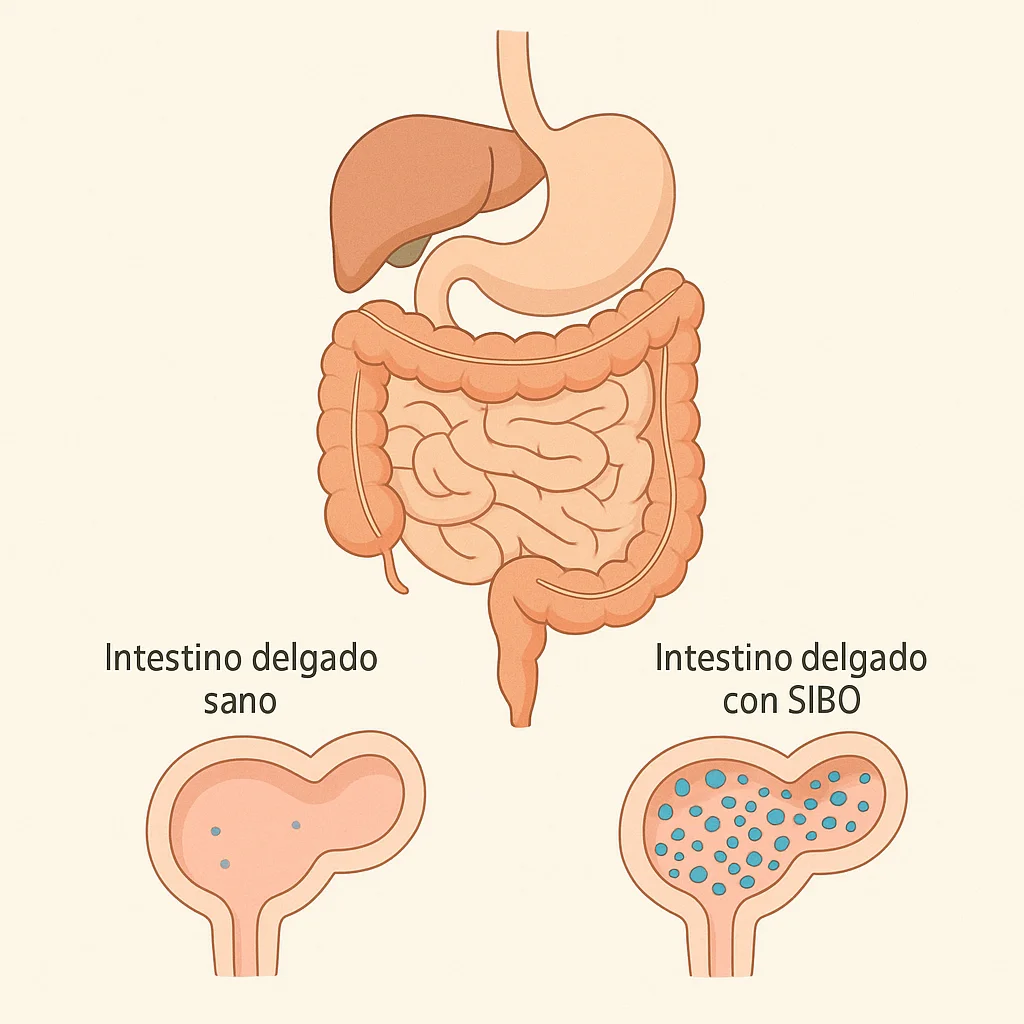
According to the 2020 ACG clinical guideline [1] and the AGA update from the same year [2], SIBO occurs when there is an abnormally high number of bacteria in the small intestine, or when bacteria that normally live in other parts of the digestive tract (especially the colon) migrate and proliferate in the small intestine.
The small intestine: a delicate ecosystem
To understand SIBO, it’s important to know how the small intestine normally works:
Under normal conditions:
- The small intestine contains relatively few bacteria (less than 10,000 per milliliter of fluid)
- These bacteria are mainly beneficial and aid in digestion
- The small intestine is designed to absorb nutrients, not to host large bacterial populations
- Intestinal movement (peristalsis) keeps the bacteria moving, preventing their buildup
In SIBO:
- The number of bacteria can increase to more than 100,000 per milliliter (or even more)
- These bacteria may be of the wrong type or in the wrong place
- The bacteria ferment food before it is fully digested
- This produces gas, inflammation, and digestive symptoms
Types of SIBO
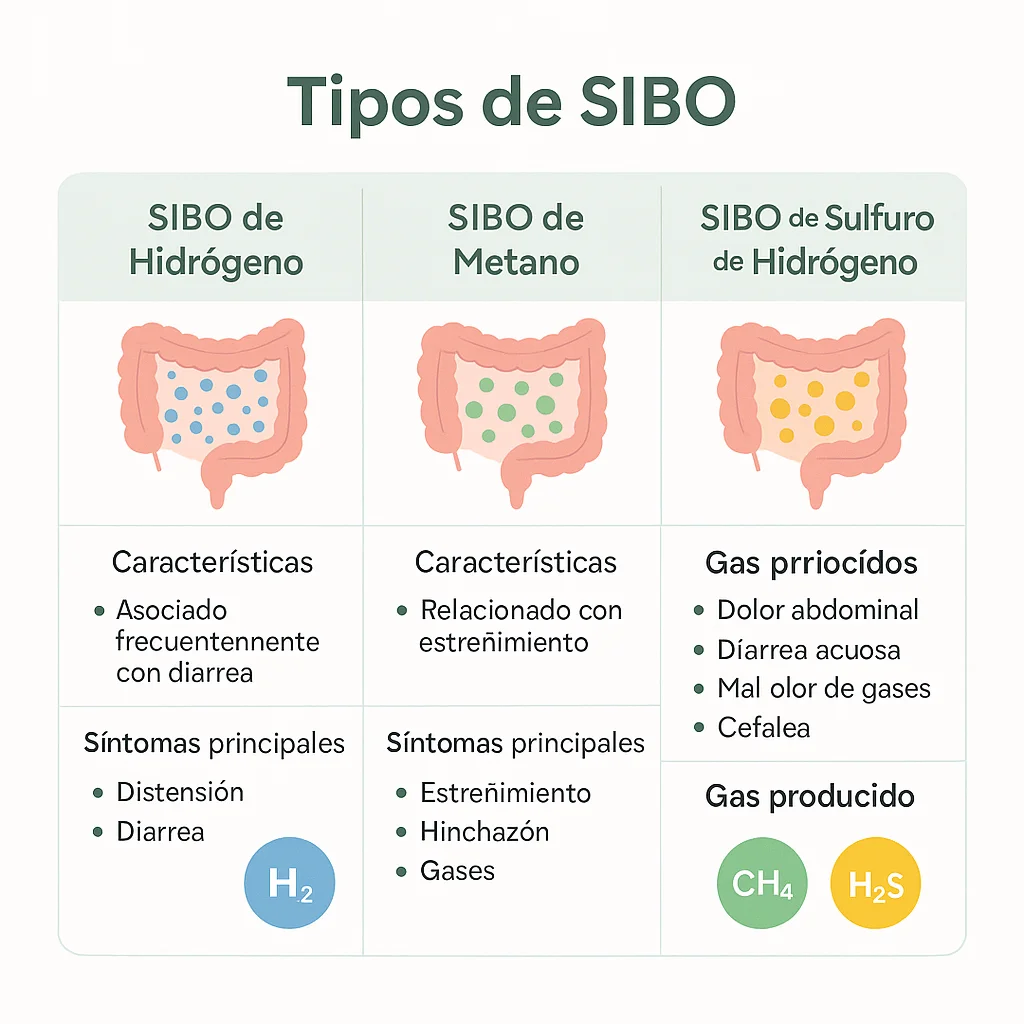
Not all cases of SIBO are the same. The current classification, reflected in the ACG guideline [1], distinguishes the types according to the predominant gas the bacteria produce. One detail that causes confusion: methane SIBO is technically produced by archaea, not bacteria, and recent literature is beginning to use the term IMO (Intestinal Methanogen Overgrowth) to differentiate it, although in clinical practice many professionals still talk about “methane SIBO.”
Hydrogen-dominant SIBO (H2)
Characteristics:
- The bacteria produce mainly hydrogen as a byproduct of fermentation
- Associated with symptoms of diarrhea and frequent bowel movements
- It is the most common type of SIBO
- The bacteria ferment carbohydrates quickly
Typical symptoms:
- Diarrhea or frequent loose stools
- Severe abdominal bloating
- Excessive gas
- Urgency to go to the bathroom
- Cramping-type abdominal pain
Methane-dominant SIBO (CH4)
Characteristics:
- The bacteria produce mainly methane
- Associated with predominantly constipation symptoms
- Methanogenic archaea (such as Methanobrevibacter smithii) convert hydrogen into methane
- It can be harder to treat than hydrogen SIBO (SIBO-H2)
Typical symptoms:
- Severe and persistent constipation
- Abdominal bloating (sometimes very pronounced)
- A feeling of fullness after eating
- Fewer bowel movements (days can pass without going to the bathroom)
- Hard stools that are difficult to pass
Hydrogen sulfide–dominant SIBO (H2S)
Characteristics:
- The bacteria produce hydrogen sulfide
- Less common but increasingly recognized
- Associated with severe symptoms and extreme fatigue
- It can cause diarrhea with a characteristic odor
Typical symptoms:
- Diarrhea with a very strong, characteristic odor
- Severe fatigue and weakness
- Abdominal pain
- Nausea
- Intolerance to sulfur-containing foods
SIBO symptoms: a complete guide
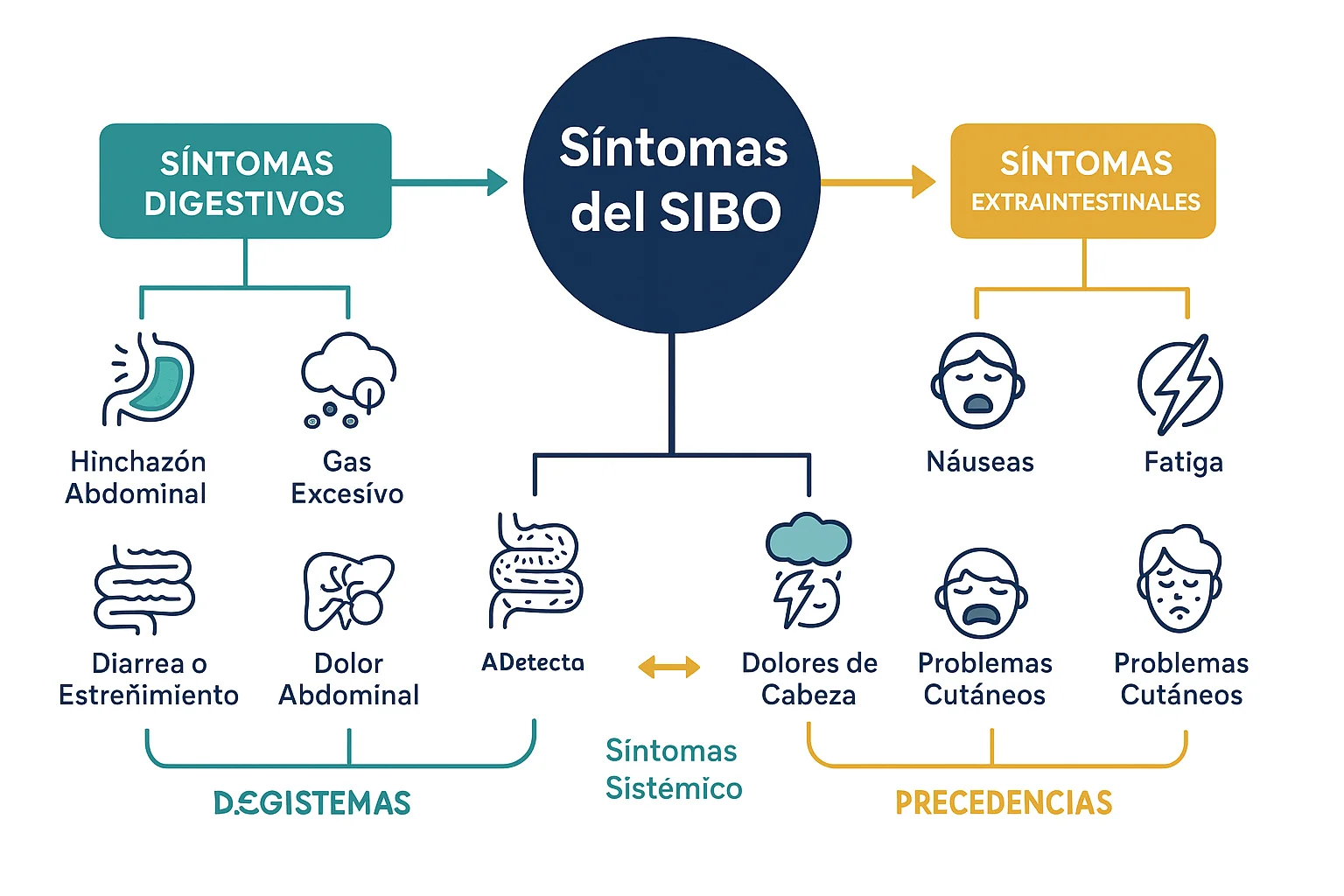
SIBO symptoms can vary significantly from person to person, and their intensity can fluctuate. Some people experience mild, occasional symptoms, while others have severe symptoms that affect their daily quality of life.
Main digestive symptoms
Abdominal bloating (distension):
- One of the most common and characteristic symptoms
- It can occur after eating or worsen over the course of the day
- The bloating can be so severe that some people look pregnant
- It generally worsens with foods rich in fermentable carbohydrates
Excessive gas:
- Frequent flatulence
- Excessive belching
- A feeling of trapped gas
- It can be embarrassing and affect social life
Abdominal pain:
- It can range from mild discomfort to severe pain
- Often described as cramping, stabbing, or pressure
- It may be localized or generalized
- It can worsen after eating
Changes in bowel movements:
- Diarrhea: Loose or watery stools, frequent urgency
- Constipation: Difficulty passing stool, hard stools, infrequent bowel movements
- Alternation: Some people alternate between diarrhea and constipation
- Stools with mucus: Mucus may appear in the stool
- Changes in consistency: Stools that vary a lot from one day to the next
Nausea:
- A feeling of stomach upset
- It can occur after eating
- Sometimes accompanied by loss of appetite
Reflux and heartburn:
- Some people with SIBO experience acid reflux
- It may be related to increased abdominal pressure
- Or to changes in digestive motility
Non-digestive (extraintestinal) symptoms
SIBO does not only affect the digestive system. Many people experience symptoms in other parts of the body:
Fatigue:
- Persistent tiredness that does not improve with rest
- It can be severe and debilitating
- Often related to nutrient malabsorption
- It can worsen after eating
Brain fog:
- Difficulty concentrating
- Memory problems
- A feeling of a “clouded head”
- It can affect work and daily activities
Headaches:
- Frequent headaches or migraines
- They may coexist with digestive problems through multiple mechanisms
- They should be evaluated according to intensity, frequency, and personal history
Joint and muscle pain:
- Pain in the joints
- Muscle stiffness
- It may be related to systemic inflammation
Skin problems:
- Skin rashes
- Acne
- Rosacea (especially on the face)
- Itching
Mood problems:
- Anxiety
- Depression
- Irritability
- It may be related to the gut-brain connection
Sleep problems:
- Difficulty falling asleep
- Waking up frequently
- Unrefreshing sleep
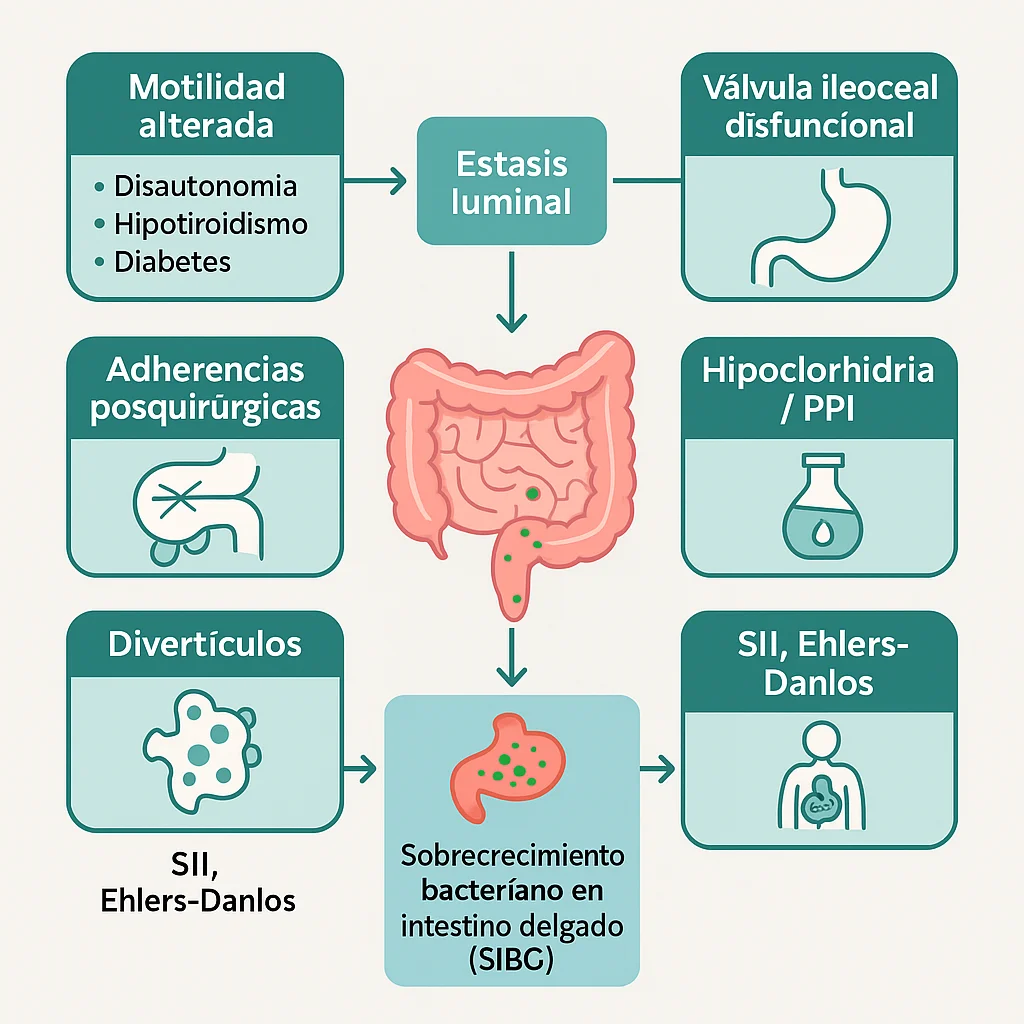
Why does SIBO occur? Causes and risk factors
SIBO does not have a single cause. It generally develops when there is a combination of factors that disrupt the normal balance of the small intestine.
Main causes
1. Disruptions in intestinal motility
The small intestine has a mechanism called the Migrating Motor Complex (MMC) that works like a natural “vacuum cleaner,” sweeping bacteria and food debris toward the colon between meals.
When the MMC does not work properly:
- Bacteria can build up in the small intestine
- Food can stay too long without being digested
- This creates an ideal environment for bacterial overgrowth
Factors that can disrupt motility:
- Prolonged use of medications that affect motility (should be evaluated by a doctor)
- Neurological conditions that affect the nerves of the intestine
- Previous abdominal surgeries
- Poorly controlled diabetes (can affect the nerves of the intestine)
- Untreated hypothyroidism
2. Anatomical alterations
Any change in the normal structure of the small intestine can allow bacteria to build up:
- Adhesions: Internal scars from previous surgeries that can create “pockets” where bacteria accumulate
- Diverticula: Small pouches in the intestinal wall where bacteria can grow
- Surgeries: Procedures such as gastric bypass, intestinal resections, or surgeries that alter the normal anatomy
- Fistulas: Abnormal connections between different parts of the intestine
- Strictures: Narrowings of the intestine that can cause stagnation
3. Reduced stomach acid
Stomach acid normally kills many bacteria before they reach the small intestine. When there is less acid:
- More bacteria survive and reach the small intestine
- They can proliferate more easily
Factors that reduce stomach acid:
- Prolonged use of medications that reduce acid (should be evaluated by a doctor)
- Natural aging (stomach acid can decrease with age)
- Gastric surgeries
- Certain medical conditions
4. Disruptions in the intestinal valves
The body has valves that control the flow between different parts of the digestive tract:
- Ileocecal valve: Separates the small intestine from the colon
- If this valve does not work properly, bacteria from the colon can migrate into the small intestine
5. Compromised immune system
A healthy immune system helps keep bacteria under control. When it is compromised:
- Bacteria can proliferate more easily
- The body has less ability to control the overgrowth
Risk factors
Certain conditions and situations increase the risk of developing SIBO:
Associated medical conditions:
- Irritable Bowel Syndrome (IBS)
- Celiac disease
- Crohn’s disease
- Type 1 or type 2 diabetes
- Hypothyroidism
- Scleroderma
- Fibromyalgia
- Parkinson’s disease
- Liver cirrhosis
Lifestyle factors:
- A diet high in refined carbohydrates and sugars
- Excessive alcohol consumption
- Chronic stress
- Lack of regular exercise
Medications (always consult with a doctor before making changes):
- Medications that reduce stomach acid (prolonged use)
- Broad-spectrum antibiotics (can disrupt the bacterial balance)
- Medications that affect intestinal motility
- Opioids (can significantly slow motility)
Complications of SIBO
If SIBO is not treated properly, it can lead to serious complications:
Nutritional complications
Nutrient malabsorption:
- Bacteria can consume nutrients before the body absorbs them
- It can lead to vitamin and mineral deficiencies
- Especially concerning: deficiency of vitamin B12, iron, calcium, magnesium

SIBO bacteria compete for essential nutrients such as vitamin B12, which often leads to fatigue and extreme weakness.
Unintentional weight loss:
- Due to malabsorption
- Or to reduced intake because of symptoms
Malnutrition:
- In severe and prolonged cases
- It can affect multiple body systems
Digestive complications
Leaky gut:
- Chronic inflammation can damage the intestinal barrier
- It allows substances that shouldn’t pass into the bloodstream to do so
- It can increase systemic inflammation
Food intolerances:
- Multiple intolerances can develop
- They make the diet increasingly restrictive
Digestive system dysfunction:
- The intestine can become increasingly dysfunctional
- Symptoms may worsen over time
Systemic complications
Systemic inflammation:
- Some people report symptoms in other systems, but these do not always have a single explanation
- If new or intense symptoms appear, it is best to review them with a professional
Chronic fatigue:
- It can become severe and debilitating
- It significantly affects quality of life
⚠️ IMPORTANT: If you experience persistent digestive symptoms or warning signs, seek professional medical help. An early evaluation can help rule out other causes and organize the next steps.
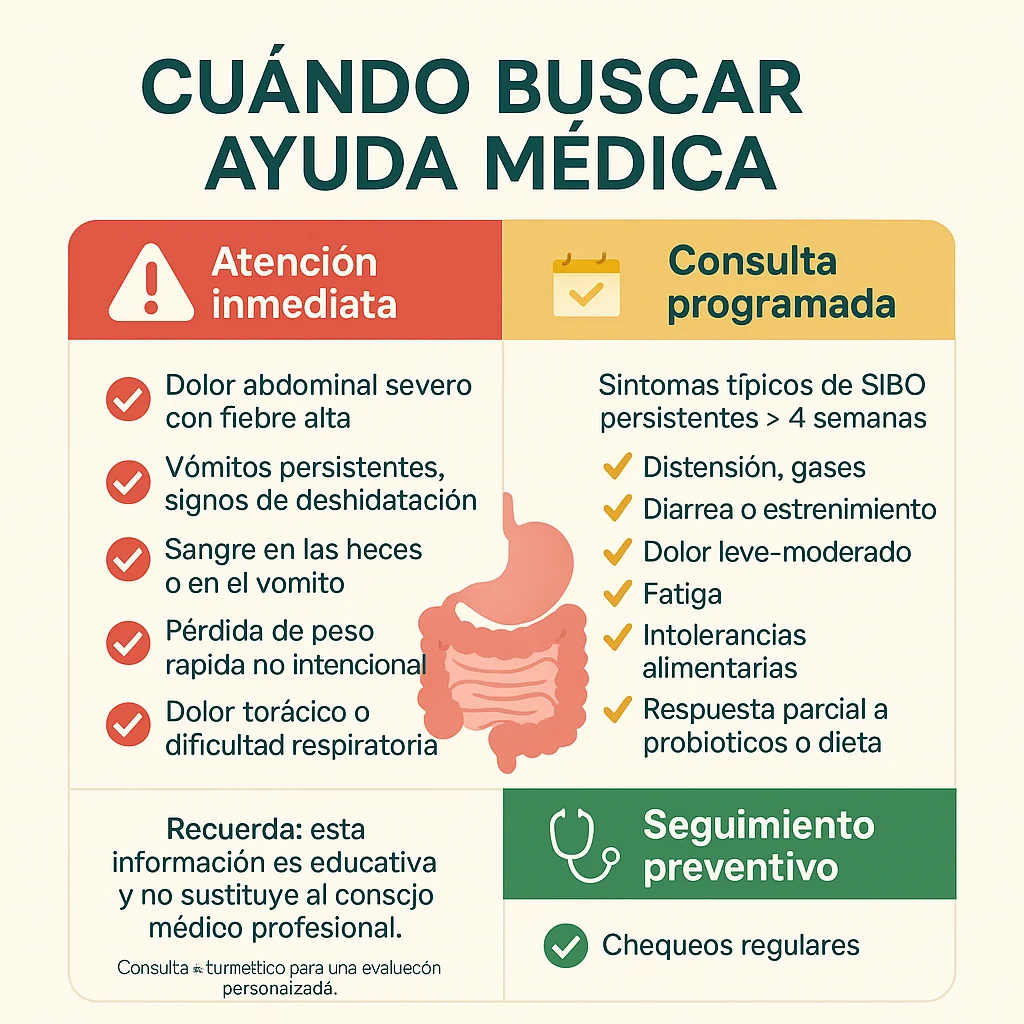
When to seek medical help?
It is important to consult with a medical specialist (gastroenterologist) if you experience:
Warning signs that require immediate medical attention
- Blood in the stool: It may indicate other serious conditions
- Significant unintentional weight loss: More than 5% of body weight within a few months
- Severe abdominal pain: That does not improve with basic measures
- Persistent vomiting: Especially if it prevents you from eating or drinking
- Persistent fever: It may indicate an infection
- Symptoms that worsen rapidly: Requires urgent evaluation
Symptoms that warrant a medical consultation
- Persistent digestive symptoms: That last more than a few weeks
- Symptoms that affect your quality of life: They interfere with work, relationships, or daily activities
- Symptoms that worsen after eating: Especially with certain foods
- Severe fatigue: That does not improve with rest
- Multiple symptoms: Digestive and extraintestinal combined
- A history of associated conditions: If you have IBS, celiac disease, diabetes, etc.
Preparing for the medical consultation
To make the most of your medical consultation, consider:
Keeping a symptom diary:
- Note which symptoms you experience
- When they occur (after eating, at certain times of the day, etc.)
- Which foods seem to worsen the symptoms
- How they affect your daily life
A list of medications and supplements:
- All the medications you take (with or without a prescription)
- Vitamin or herbal supplements
- Medications you have taken in the past
Medical history:
- Previous surgeries
- Diagnosed medical conditions
- Family history of digestive conditions
Questions to ask the doctor:
- What tests do I need to diagnose SIBO?
- What type of SIBO might I have?
- What are my treatment options?
- Do I need to make changes to my diet?
- When should I see improvement in symptoms?
- What should I do if the symptoms worsen?
Diagnosing SIBO
Diagnosing SIBO requires a professional medical evaluation. The typical process includes:
1. Initial clinical evaluation
Complete medical history:
- Current symptoms and their duration
- Prior medical history
- Medications and supplements
- Previous surgeries
- Associated medical conditions
- Family history
Physical examination:
- Evaluation of the abdomen
- Listening to bowel sounds
- Evaluation of signs of malnutrition
- Evaluation of other related systems
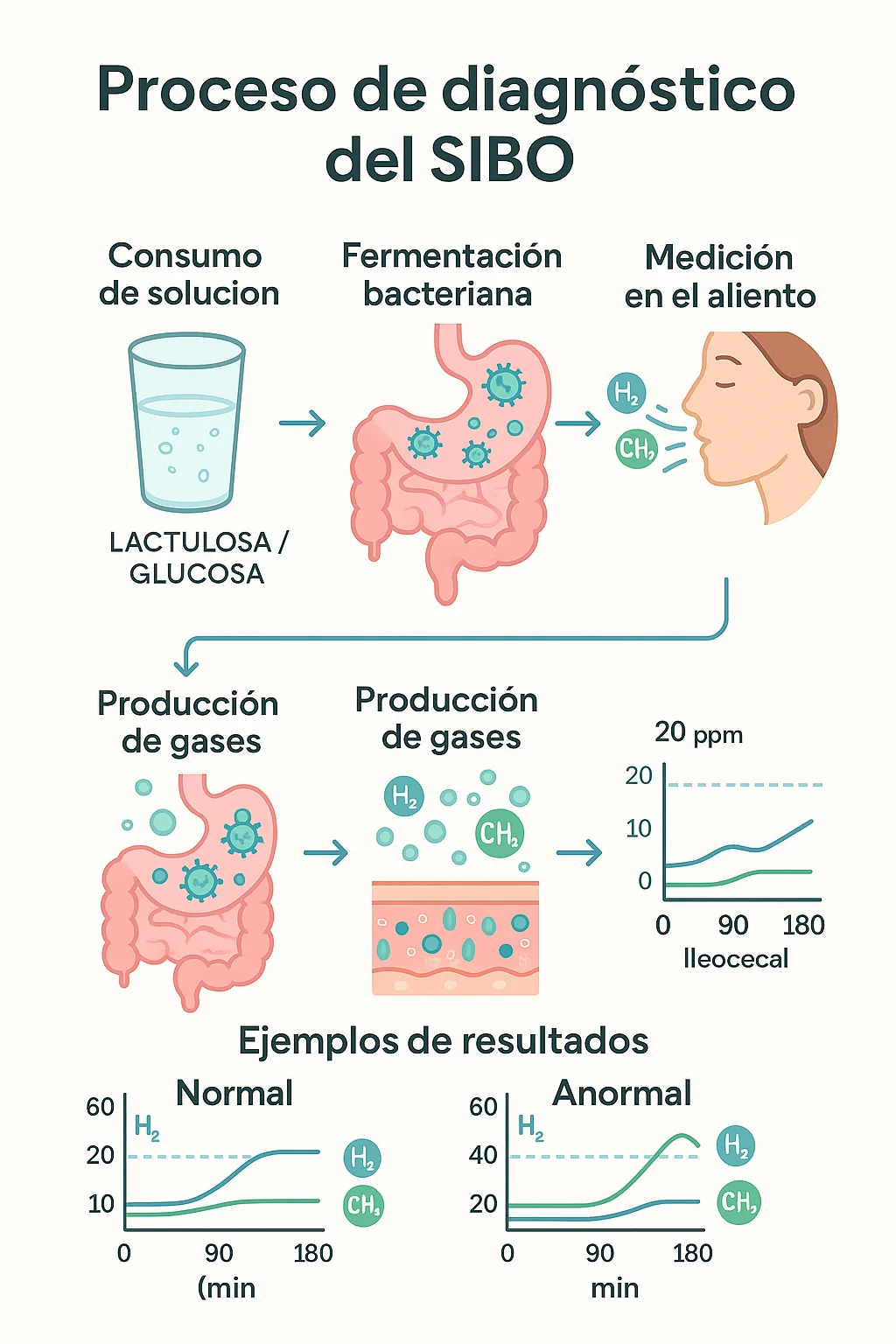
2. Breath test
The breath test is the most widely used noninvasive test for investigating SIBO [1][2]. It has known limitations (sensitivity and specificity vary depending on the substrate and the protocol), but it remains the most accessible tool in clinical practice:
How it works:
- You consume a sugar solution (lactulose or glucose)
- The bacteria in the small intestine ferment the sugar
- This produces gases (hydrogen, methane, or hydrogen sulfide)
- These gases are absorbed into the bloodstream and exhaled
- The levels of these gases in your breath are measured at regular intervals
Preparation:
- It requires specific preparation (a special diet, fasting)
- It must be supervised by a medical professional
- The results are interpreted by a medical specialist
Types of test:
- Lactulose test: Detects SIBO throughout the small intestine
- Glucose test: More specific for the upper part of the small intestine
3. Other complementary tests
Depending on your specific case, your doctor may recommend:
- Blood tests: To evaluate nutritional deficiencies, inflammation markers
- Stool tests: To rule out other conditions, evaluate digestion
- Endoscopy: To evaluate the structure of the small intestine
- Motility tests: To evaluate how the intestine moves
⚠️ IMPORTANT: The diagnosis of SIBO must be made by a medical specialist. Do not try to self-diagnose based solely on symptoms. Many digestive conditions share similar symptoms, and an accurate diagnosis is essential for effective treatment.
Preventing SIBO
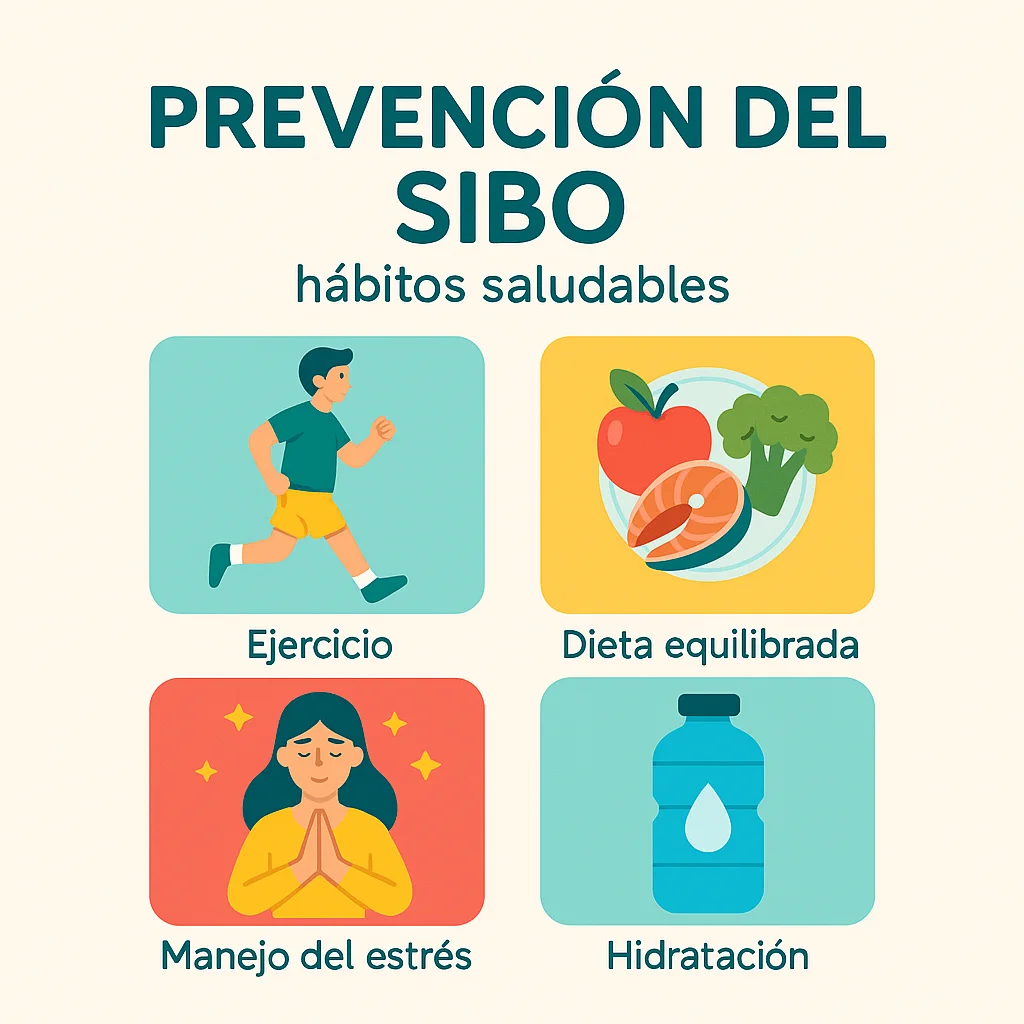
Although it is not always possible to prevent SIBO, especially if there are underlying medical risk factors, there are measures that can help reduce the risk:
A healthy lifestyle
A balanced diet:
- Eat a variety of nutritious foods
- Avoid extremely restrictive diets without medical supervision
- Stay well hydrated
- Consider working with a nutritionist if you have dietary restrictions
Regular exercise:
- Exercise can help maintain healthy intestinal motility
- It doesn’t need to be intense; even walking regularly can help
- Consult with your doctor about the type of exercise appropriate for you
Stress management:
- Chronic stress can affect digestive function
- Relaxation techniques, meditation, or therapy can help
- Prioritize rest and adequate sleep
Avoiding modifiable risk factors:
- Limit alcohol consumption
- Don’t smoke
- Maintain a healthy weight
- Manage chronic medical conditions properly (with medical supervision)
If you have already had SIBO
If you have been treated for SIBO before, these measures can help prevent recurrence:
- Follow your doctor’s recommendations on preventing recurrence
- Work with a nutritionist to develop an appropriate diet
- Consider maintenance strategies recommended by your doctor
- Maintain regular medical follow-up
- Address any identified predisposing factor
Living with SIBO: practical tips
If you have been diagnosed with SIBO, these tips can help you manage the condition better:
Daily symptom management
Eating:
- Eat smaller, more frequent meals instead of large meals
- Chew your food well
- Drink water between meals, not during meals
- Consider working with a nutritionist who specializes in SIBO
- Keep a food and symptom diary to identify patterns
Physical activity:
- Gentle exercise can help with intestinal motility
- Walking after meals can be beneficial
- Avoid intense exercise immediately after eating
- Consult with your doctor about the type of exercise appropriate for you
Stress management:
- Practice relaxation techniques regularly
- Prioritize rest and sleep
- Consider therapy or support groups if stress is significant
- Find activities that you enjoy and that relax you
Emotional support:
- SIBO can be frustrating and affect emotional well-being
- Seek support from family and friends
- Consider joining support groups for people with SIBO
- Don’t hesitate to seek professional help if you need emotional support
Working with your medical team
Open communication:
- Be honest about your symptoms and how they affect you
- Ask questions when you don’t understand something
- Share any concerns you have
- Inform your doctor about any change in your symptoms
Regular follow-up:
- Attend all follow-up appointments
- Inform your doctor about your progress
- Discuss any side effects of treatments
- Work with your doctor to adjust the plan as needed
Conclusion
SIBO is a complex condition that can affect quality of life. Understanding the symptoms, the limits of the tests, and the clinical context helps you have better conversations with health professionals.
Key points to remember:
- The approach should be individual: A professional evaluation helps decide what to investigate and what to prioritize
- Every person is different: What works for one person may not work for another
- Professional diagnosis is essential: Do not try to self-diagnose
- Management may involve several pieces: Diet, symptoms, motility, history, and associated conditions can all matter
- Patience is important: Sorting out the full picture can take time
- Support is valuable: You don’t have to face this alone
⚠️ FINAL REMINDER: This guide is informational and educational. If you suspect you might have SIBO or you experience persistent digestive symptoms, it is essential that you consult with a medical specialist (gastroenterologist) to obtain a proper diagnosis and a personalized treatment plan. Your health and well-being are what matter most.
Additional resources:
- Consult with a gastroenterologist for diagnosis and treatment
- Consider working with a nutritionist who specializes in digestive conditions
- Look for support groups for people with SIBO
- Stay informed with reliable medical sources
Last updated: May 2026
References cited in this guide
- Pimentel M, Saad RJ, Long MD, Rao SSC. ACG Clinical Guideline: Small Intestinal Bacterial Overgrowth. Am J Gastroenterol. 2020;115(2):165-178. PubMed
- Quigley EMM, Murray JA, Pimentel M. AGA Clinical Practice Update on Small Intestinal Bacterial Overgrowth: Expert Review. Gastroenterology. 2020;159(4):1526-1532. PubMed
Important editorial note
This information is for educational purposes only and does not replace individualized professional advice. Always discuss decisions about your health with a qualified professional.
Sources and references
These references guide how this piece is written and updated. They do not replace individual clinical assessment.
Reference1
ACG Clinical Guideline: Small Intestinal Bacterial Overgrowth (2020)Guía clínica del American College of Gastroenterology para diagnóstico y tratamiento.
Reference2
AGA Clinical Practice Update on Small Intestinal Bacterial Overgrowth (2020)Actualización de buenas prácticas con énfasis en límites diagnósticos y manejo clínico.
Beiker Guillen
Founder of Sibo Wise
I'm not a health professional — I'm a software developer. I started Sibo Wise when my sister was diagnosed with SIBO and I saw how hard it was to find clear, trustworthy information. My role here is research and organization: I gather what serious medical sources say —clinical guidelines from the ACG and AGA, Monash University materials, and PubMed-indexed studies— and cross-check every claim against its original source before publishing.
This content does not replace professional medical advice. If you have any concerns about your health, consult a qualified gastroenterologist or dietitian.